How to Tell If a Kitchen Cabinet Is Actually Well Made Before You Buy It
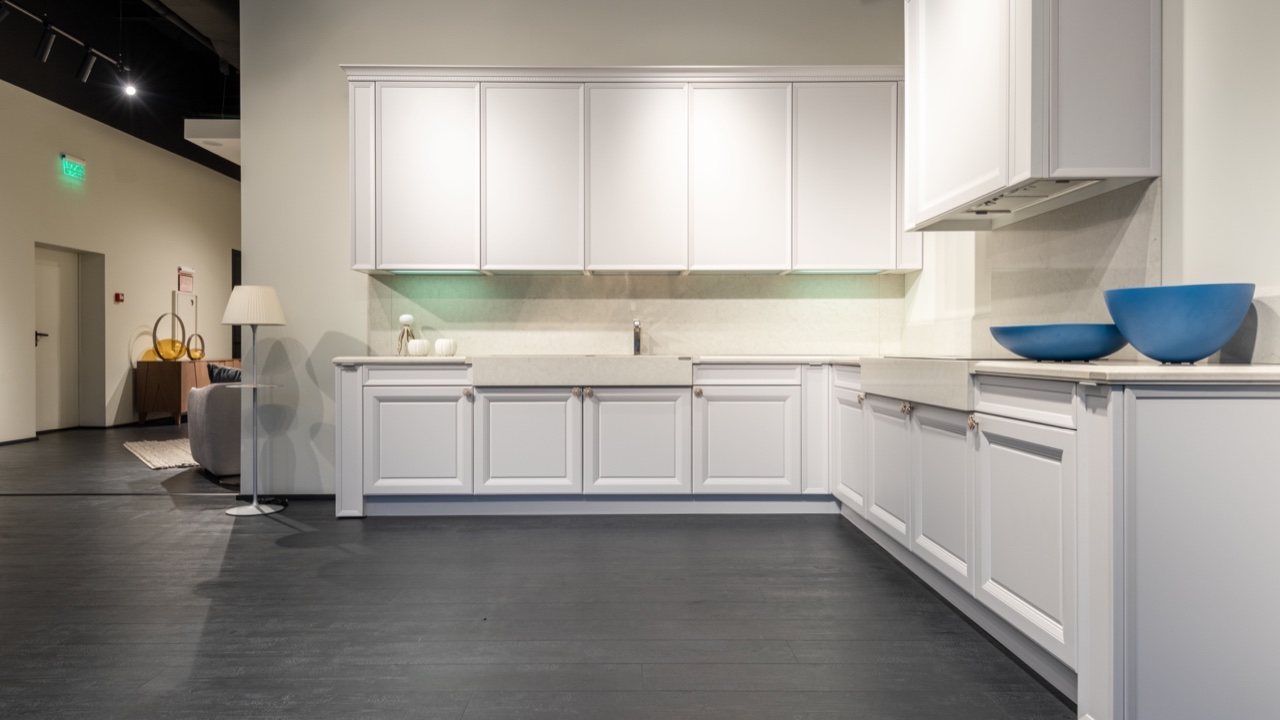
Most people buy kitchen cabinets in a showroom, surrounded by display units that are well-lit, professionally staged, and have been opened and closed by salespeople hundreds of times without showing any wear. Everything looks good in a showroom. The question is what it looks like in a real kitchen, under real conditions, five years from now.
You don’t need to be a manufacturing expert to evaluate cabinet quality before you buy. You need to know what to look at and what questions to ask. Here’s what actually tells you something useful.
Open and Close Every Drawer Slowly
Not once, quickly — slowly, all the way out and all the way back in. Good drawer slides extend smoothly without any lateral wobble, and close with consistent resistance all the way to the end. The soft-close mechanism should engage about halfway through the closing motion and bring the drawer home quietly.
What to notice: whether the drawer wiggles side-to-side when extended, whether the closing speed is consistent or lurches at any point, whether the drawer sits flush with the cabinet face when closed. A drawer that wobbles when extended is using cheap slides that will develop more play over time. A drawer that closes unevenly is either misaligned or using hardware that’s already showing its limits in a showroom environment.
This test tells you more about hardware quality than any specification sheet, because the slides in the showroom sample are the same ones that go into the production unit.
Look at the Edge of Every Door
Pick up a door — either lift a sample door or open a cabinet door and look at its edge from a shallow angle under good light. You’re looking at the edge banding: the thin strip of material that seals the cut edge of the panel.
Good edge banding applied with a laser process has no visible seam where the banding meets the panel face. The joint is fused rather than glued, and you can’t see the line. Conventional hot-melt adhesive banding has a faint seam that you can see if you look carefully — a thin line where the banding meets the panel face.
The seam you’re looking at is the point of attack for moisture in a kitchen environment. Steam from cooking, condensation from cold surfaces, cleaning with damp cloths — all of these work at that joint over time. Laser edge banding resists this; adhesive banding eventually lifts, starting at corners and edges where the stress concentrates. In a showroom, both types look fine. After four or five years in a kitchen, they look very different.
Lift a Cabinet Door and Pay Attention to the Weight
This is a simple test with a clear signal. Lift a base cabinet door and let it swing open freely, then hold it at about 45 degrees. The weight you feel is the weight of the door panel, which reflects the density and thickness of the board underneath whatever finish is on the surface.
Heavier doors, with more resistance and a more solid feel, generally indicate denser, higher-grade board material. Very light doors that swing too easily suggest thinner panels or lower-density substrate — material that holds screws less firmly, dents more easily, and responds worse to the moisture environment of a kitchen.
This isn’t a precise measurement, but it’s a calibrated impression. A door that feels substantial and solid is using better material than one that feels hollow or flimsy. The weight difference between E0-certified density board and lower-grade alternatives is physically perceptible.
Ask for the Board Certification
This is the question that separates confident manufacturers from ones with something to hide. Ask the salesperson to tell you what board certification the cabinets use — E0, E1, or ENF (also called F4 star in some markets).
E0 and ENF are low-formaldehyde certifications that meet stricter indoor air quality standards. E1 is the baseline that most products meet and allows for higher formaldehyde emission levels. The difference matters in an enclosed kitchen space, particularly for cabinets around cooking surfaces where heat accelerates off-gassing.
A salesperson who can answer this immediately, with the certification document available if you ask to see it, is working for a manufacturer that’s confident in its materials. One who says they’ll find out, or who describes the boards as “premium” or “imported” without being able to name the certification, is probably not using material that would survive the comparison.
Check the Inside of the Cabinet
Open a base cabinet and look inside. The interior surfaces — carcass panels, shelf surfaces, the back panel — are where material shortcuts are most commonly taken, because buyers look at the outside more than the inside.
What good construction looks like inside: the same finish quality on interior surfaces as exterior, shelf pin holes that are clean and evenly spaced, a back panel that’s substantial enough to add rigidity to the cabinet box rather than just covering the wall. What lower-quality construction looks like: raw or lightly finished interior surfaces, back panels that flex when pressed, shelf holes that are drilled inconsistently.
The inside of the cabinet is also where you can see whether the corner joints are mechanical fasteners or just glue. Mechanical connections — cam locks, confirmat screws — make a more rigid box than glue alone, and the box rigidity determines how well the cabinet holds its shape under the weight of everything that goes inside it over years of use.
The Hinge Test
Close a cabinet door, then open it slowly and let go when it’s at about 30 degrees open. A well-adjusted hinge holds the door at that position without it swinging further open or creeping closed. This tells you both about hinge quality and about the adjustment that’s been done in the showroom.
More importantly: with the door open, look at the gap between the door edge and the adjacent door or cabinet frame. This gap should be even top to bottom — consistent width, parallel lines. An uneven gap means the door is hung imprecisely, which in a showroom (where everything has been set up with care) suggests the manufacturer’s tolerances aren’t tight enough for consistent results at scale.
What These Checks Add Up To
None of these checks require technical knowledge. They require knowing what to look at and being willing to spend twenty minutes in a showroom doing actual investigation rather than looking at finishes and imagining how the kitchen will look.
The finish is easy to evaluate — you can see it. The things that determine how the kitchen holds up over ten years are underneath the finish, in the drawer slides and board density and edge banding and hinge quality. Those are what these checks surface.
For buyers who want to understand how a kitchen cabinetry manufacturer approaches these specifics at the production level — board specifications, hardware sourcing, edge banding process, quality control — asking directly is always the right move. A manufacturer with nothing to hide will walk you through it. The ones who can’t are telling you something useful.